February 25, 2010

Friedman in the News

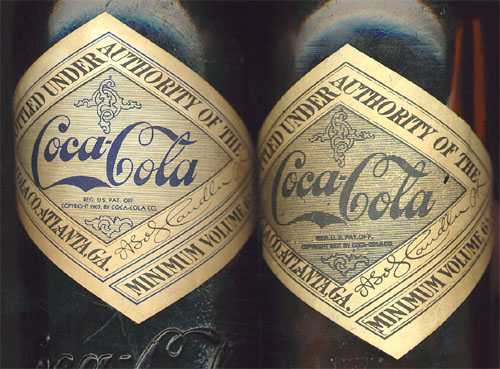
    An article published today by USA Today highlighted Coke-Cola Enterprises plan to buy out the primary bottlers of their products, in an attempt to bolster competition by cutting out the middleman. Coke hopes that by doing this they can increase their profits, make their bottled products more cost efficient for the consumer and create the next wave of high return opportunities.
    The issue with Coca-Cola Enterprise controlling the bottling of their products is that the bottlers usually advised Coca-Cola which suppliers were most in need of their products. By removing this check by the bottlers, Coca-Cola can control the marketplace by deciding who sells their product and could lead to them becoming even more of a private monopoly.
    Milton Friedman would argue  as he did in Capitalism and Freedom, 1962, that the best kind of monopoly is a private monopoly and that Coca-Cola's choice will either be accepted by the marketplace and actually create competition as they believe it will or the marketplace will do away with Coke because ultimately there is no demand for their products. Friedman would also argue however that the elimination of the bottlers will actually make Coca-Cola a little less efficient because privatizing helps to make production more efficient.
     However, Coco-Cola's bold decision to cut out the middle man will give rise to society’s self-interest in the product which will lead to the protection of society as a consequence. Competitive capitalism will also free us by giving us more economic freedom because we have choices. Friedman argues that economic freedom is a component of our total freedom and therefore will give rise to political freedom. Ultimately a free market economy will lead to democracy; therefore Friedman would argue the more competition created the better.
    Whether Coca-Cola Enterprises will actually make their products more cost efficient for their consumers with venture is up for debate but they will create competition because they have a leading brand and a product that the marketplace desires. The most pertinent issue for Coca-Cola Enterprises is to make their stockholders happy and I think they will with this venture.

Image location"http://images.google.com/imgres?imgurl=http://www.antiquebottles.com/coke/CokeLabels.jpg&imgrefurl=
http://www.antiquebottles.com/coke/&usg=__vbPZIWKWZgSFQ4H9IfLZE6DtyJc=&h=369&w=500&sz=31&hl=en&start
=2&sig2=zqsj9WCu2vLIwFt6tIM0jw&um=1&itbs=1&tbnid=7IACeOizt1WwHM:&tbnh=96&tbnw=130
&prev=/images%3Fq%3Dcoke%2Bbottle%2Bwithout%2Blabel%26um%3D1%26hl%3Den%26sa%3DN%26tbs%3
Disch:1&ei=JDeHS8TQHsyxlAevhq3RAQ

February 11, 2010

Marx in the News


        An article published in the Associated Press today highlights an investigation launched by the IRS into companies such as Target, Comcast and Fed-Ex whom are illegally classifying full-fledged employees as independent contractors. By doing so the companies have retained revenue that should have been paid out to the federal government, illegally saved 30% on payroll costs, avoided unemployment insurance and workers' compensation payments, and retained employee's share of payroll withholding. In New York alone there has been nearly 31, 500 cases of employee misclassification and almost $390 million unreported wages from 2007-2009. Both Comcast and Target have been sued for hiring intermediary companies that denied benefits to workers, but both allege that the independent contractors involved were never employed with their companies.
        Ethically speaking independent contractors are being cheated out of the benefits that they should be entitled to as actual employees for the products of their labor. In addition the actual employees of the companies are being undercut by the independent contractors which are taking their jobs for less pay, causing competitively decreasing wages and furthermore rising unemployment. The companies have several causes for the misclassification such as the recession. Others like Target say that the use of independent contractors helps to keep costs low and make flexibility possible in a hard-hitting competitive economy. However keeping costs low doesn't explain why an independent contractor, injured on the job, would have to obtain a court ruling in order to be deemed an employee of the company before they could collect workers' compensation.
        It is clear to see that employee misclassification insofar as contractor abuse is a huge issue in our country, which has extended on the worker level to all fields of industry and several states, mainly where low income and low skilled workers are populous. The question is where does this inequality and abuse stop? As Karl Marx wrote in the Marx-Engles Reader in 1847 of Wage Labour and Capital, "A general rivalry arises among the capitalists to increase the division of labour and machinery and exploit them [the worker] on the greatest possible scale." Marx would argue that the exploitation and abuse from the capitalist class will continue as long as the independent contractors are giving away their labor power and working for time based wages rather than the abstract value of their labor.
        Marx would propose that as long as the capitalist class is in constant competition to increase their bottom line, they will use any tactic to make a profit, be it reducing the cost of production which leads to the abridgment and further increase in the division of labor or brash layoffs which will cause unemployment. This pool of unemployment for Marx leads to the competition in the working class, and the depreciation of the job itself within the market. Moreover Marx would say that if companies continue to operate in this fashion, the independent contractors would become alienated from the product of their labor, the activity of the products produced from their labor and from themselves as the creatures that labor.
        The companies mentioned all have an obligation to their shareholders to increase profits but by what means are these companies willing to go to obtain their ends. This type of business ethos is fundamentally backward because without the worker being of good health they can't work and provide further profit for your company. The company is acting against their bottom line because they will have to find another contractor who may not be accustomed to the labor and may not produce as good of a product or may need to be trained to some extent. In the long run these companies will potentially lose more by undercutting the worker and misclassifying them than actually hiring them on as full-fledged employees.

January 30, 2010

Locke in the News

         CNN reported on topics discussed at the World Economic Forum (WEF) in Davos, Switzerland January 28th. The hottest issue pressing is that of the South African President, Jacob Zuma’s polygamist lifestyle and his 3rd marriage at the age of 67.  Even though polygamy is legal in South Africa, many are arguing that its practices are rooted in old tradition; a tradition that lacks respect for women and is no longer civilized by the standards of modern times. President Zuma however argues that polygamy is a living tradition in his culture, and should not be questioned because South Africa is a nation that fully respects the culture of other countries. Moreover President Zuma argues that his personal life neither influences his views on politics, nor his views on the equality of the female gender.
        Ethically speaking the issue with Zuma’s behavior here is that he is the President of South Africa, therefore a role model for an entire country of people. Indulging in a polygamist marriage demonstrates a lack of modern understanding in what the sanctity of marriage constitutes, insofar as the bond between two individuals. If one would like to take the argument further, you could state that polygamy in itself is a compact used by one of superior authority to hoard individuals who are of lesser authority as one’s property. This concept goes against the modern value of marriage in today’s society.
        The question becomes can an individual keep another being as their property through the compact of marriage or through any compact for that matter? Can Zuma as President, whom lives a polygamist lifestyle, not allow his lifestyle to have an impact on personal worldly views and relationships? Does the President of a country have a social obligation to reflect a more modern understanding of equality? Should Zuma's standards of morality be based on a time period where these practices were common in his culture, or should his standards be based on the modern concepts of morality today?
        John Locke would argue that wives turn over their property to their husband in the union of marriage, and therefore turn over the property of their body to their husband. Based on Locke's arguments in “Of Property” within “Two Treatises of Government” published in 2008, one can have as much property as one labors for so far as they make use of the property.
        In essence, as long as a husband makes use of the union of marriage with his wives, labors to produce property for them and not neglect one wife over the wife insofar as equality,  he may have as many wives as he can provide for. Therefore Locke would argue Zuma’s polygamist lifestyle is justified, so far as the president installed his bodily labor into the property, will provide for the wives equally and will make use of the wives equally.
        Even though Locke would argue that polygamy is justified, he does not take into account the social relationship that the individual has to the world. President Zuma has an obligation to maintain social, political and professional temperance, insofar as his virtues and decorum. However, the Presidents current practices are a breach of all of these moral standards.
        How can one ask for commutative, distributive or social justice from their country or the world, when they as the President cannot uphold the sovereignty in their compact of marriage before God? It stands to be argued further, if Locke's ethos of property looks into the morality of mankind and social injustice caused by inequality. Cannot property, whether labor installed by one individual or not be for the common good of a society inherently? Therefore should not the standard of morality for property, in regard to people and marriage, be based upon reason, modesty, and liberality rather than disuse?
Photo used is property of Microsoft Office - Clip Art; used with the rights from 
                                        purchasing Microsoft Office.

January 17, 2010

Unable to post comments to my blog?

Hello Everyone,

I wanted to take a moment apologize to anyone that was unable to post a comment to my blog. I have updated the settings and you should now be able to leave your comment. Please feel free to email me at jonelle.rocha@gmail.com if there are any other issues with posts on my blog.

Thank you,

Jonelle R.

January 15, 2010

Aristotle in the News

An article posted January 15th  in USA Today reveals that federal prosecutors have filed a complaint against Johnson & Johnson, whom is being accused of paying millions of dollars in kickbacks to nursing homes to prescribe the patients more of their schizophrenia drug, Risperdal, from 1999 to 2004. Johnson & Johnson maintains that they acted lawfully and appropriately, with no intent of specifically targeting nursing homes.

If Johnson & Johnson were not specifically targeting nursing homes, than why did they offer the rebates and unspecified monies specifically to the largest pharmaceutical distributor to nursing homes, Omnicare? During the period accused, Johnson & Johnson's sales profits nearly tripled from the drug, so can they truthfully allege that their relationship with Omnicare was not commercially motivated? Johnson & Johnson had an unbound desire to turn over a profit, even at the expense of our society's most vulnerable class of citizens, those residing in nursing homes, primarily the elderly.

Aristotle would argue that the art of acquisition should be subordinate to the art of economy and that the art of economy would be to live a good life, as he argued in Book I of Politics. This is clearly the art of artificial acquisition. In this case Johnson & Johnson is clearly pursuing financial profit, distorting their business mission and obligations to consumers. Aristotle's stand would be that their interest should merely be to provide quality pharmaceutical products, which will actually aid in the benefit of persons with Alzheimer's disease, dementia, or schizophrenia. Aristotle would refer to this form of unnatural exchange as retail trade. A trade with externalities, that lacks regard for the possible consequences of its products on the public (PHL 248-502 Lecture).

Even though Johnson & Johnson are arguing that they did everything appropriately, paying Omnicare to prescribe a a potentially dangerous drug (Risperdal) to individuals in nursing homes is unethical business. Should Omnicare uphold their fiduciary duty to patients? In the same sense should Johnson & Johnson uphold an ethical standard in business? If not, what responsibility should "big business" corporations have to their consumers and to the whole of society? What motivates a company like Johnson & Johnson in business relations, to use tactics such as bribery to sale their products? Could their actions just be for financial gain or to protect against possible financial loses? Either way, I believe that greater accountability has to come from corporations that we entrust the well being of our society to.  Johnson & Johnson in this case should be held to a higher standard than a single individual whom distributed a harmful drug willingly to the public. They should not be allowed to hide behind the disposition of good willed intent in "that's just business" practices.

Photo used is property of Microsoft Office - Clip Art; used with the rights from purchasing Microsoft Office.
Lecture Reference: Professor James Manos-PHL 248-502 DePaul University